

Art therapy is experiencing a surge in popularity across the world as an effective and unique form of psychotherapy. It blends the creative process with psychological techniques to help individuals explore their emotions, enhance their mental health, and unlock personal insights. This therapy, which can involve painting, drawing, sculpture, and other creative outlets, has gained widespread recognition in mental health treatment due to its ability to provide relief, emotional release, and a deeper understanding of oneself.
Over the past few decades, art therapy has moved from the fringes of psychological treatment into the mainstream. Many studies, as well as anecdotal evidence, suggest that creative expression can be a powerful tool for addressing various mental health concerns, such as anxiety, depression, trauma, and grief. Its rise in popularity can be attributed to a combination of increased awareness about mental health, a desire for alternative treatment methods, and the recognition of the power of creativity in healing.
Art therapy is also becoming more integrated into different therapeutic settings. Hospitals, mental health clinics, schools, and rehabilitation centers have begun to offer art therapy as a complementary approach to more traditional forms of treatment. One of the driving forces behind this shift is the increasing body of research supporting the effectiveness of art therapy in improving mental health outcomes. As more therapists and healthcare providers recognise its value, the accessibility and use of art therapy continue to expand.
Statistics indicate that more people are seeking art therapy as an alternative or complementary treatment for mental health issues. According to the American Art Therapy Association, approximately 75% of people who engage in art therapy report improvements in emotional and psychological well-being. This demonstrates that art therapy is not just a passing trend but a recognised method that can genuinely enhance mental health care. Moreover, art therapy has proven to be especially beneficial in cases where individuals may struggle with verbal communication or feel overwhelmed by their emotions. The creative process offers a non-verbal means of expression, providing individuals with a powerful outlet for feelings they may find difficult to put into words.
This therapy has also gained popularity for its ability to engage individuals in a way that many other forms of therapy do not. The hands-on nature of art therapy allows people to reconnect with their creative selves, often bringing them a sense of joy, accomplishment, and therapeutic relief. Whether through painting, drawing, or other artistic practices, individuals can create something tangible that reflects their inner world, providing a sense of control and personal meaning during times of emotional distress.
Another significant factor contributing to the growing popularity of art therapy is the recognition of its applicability to a wide range of age groups. From children who may struggle to express their emotions verbally, to adults dealing with complex mental health conditions, and even older adults facing the challenges of aging and memory loss, art therapy is accessible to people of all ages. For children in particular, art therapy has shown to be an invaluable tool in helping them process trauma, cope with difficult family dynamics, or simply build self-confidence and self-expression.
Moreover, art therapy is increasingly being recognised for its capacity to facilitate healing in various contexts beyond mental health care. It has gained traction in addiction recovery programs, where it helps individuals confront the emotional root causes of their addiction. It is also being used in schools to address bullying, self-esteem issues, and other challenges faced by students. Many individuals also turn to art therapy as part of a personal growth or self-care routine, exploring their creativity in a safe, non-judgmental environment.
Despite its growth in popularity, art therapy has not been without its challenges. One of the key hurdles is the lack of awareness about what art therapy entails and how it differs from traditional forms of artistic expression. Many people may be familiar with art but are unaware of the therapeutic benefits of using art in a structured, supportive setting. Additionally, the field of art therapy faces challenges in terms of standardisation and regulation, which varies from country to country. The importance of ensuring that art therapists are properly trained and certified is vital in maintaining the efficacy and safety of the practice.
As the field continues to grow, more research is being conducted to explore the underlying mechanisms of art therapy. Scientific studies have begun to investigate how creating art affects the brain, particularly in terms of stress reduction, emotional regulation, and cognitive function. While more research is needed to fully understand the impact of art therapy on the brain, early findings suggest that engaging in creative activities can reduce cortisol levels, promote neuroplasticity, and improve overall psychological resilience.
In conclusion, the popularity of art therapy is a reflection of the increasing recognition of the importance of creativity in mental health care. As more people turn to alternative and complementary forms of therapy, art therapy continues to gain traction as a powerful tool for healing and self-expression. Its rise in popularity is supported by scientific research, success stories, and the growing understanding of the therapeutic benefits of the creative process. Whether used to treat mental health disorders, promote emotional growth, or simply offer a means of self-expression, art therapy has become an invaluable part of modern psychotherapy. The future of art therapy looks bright, and its role in mental health care will undoubtedly continue to grow as more individuals discover its potential for transformation and healing.
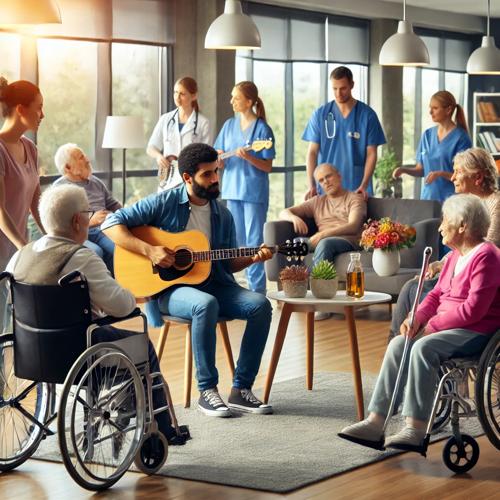
Music therapy has experienced a remarkable surge in popularity in recent decades, becoming a widely recognised and respected field in healthcare, education, and mental health support. While the healing power of music has been acknowledged for centuries, scientific research and clinical practice have solidified its role as an evidence-based therapeutic intervention.
With growing global awareness, music therapy is being integrated into hospitals, schools, rehabilitation centres, and even corporate wellness programmes. The increasing demand for holistic and non-invasive treatments has contributed to the expansion of music therapy across different demographics and cultural contexts. This article explores the rise of music therapy, its effectiveness, and how it is making an impact worldwide.
Music therapy is no longer confined to specialist clinics or alternative medicine practices. It is now a mainstream therapeutic approach, used in medical institutions, mental health facilities, and special education programmes. Several factors have contributed to its increasing popularity.
One major reason is the growing body of scientific evidence supporting its benefits. Neuroscientific research has demonstrated that music stimulates multiple regions of the brain, influencing cognition, emotions, and motor function. This has led to its widespread adoption in treating conditions such as dementia, autism, depression, and stroke recovery.
Another factor is the increasing awareness of mental health issues. As anxiety, stress, and depression rates rise globally, people are seeking alternative and complementary therapies to traditional pharmaceutical treatments. Music therapy offers a natural, engaging, and personalised way to address emotional well-being without medication.
Social media and digital platforms have also played a role in spreading awareness about music therapy. Videos showcasing the emotional impact of music on dementia patients, children with autism, and individuals recovering from trauma have gone viral, sparking interest and support for music-based interventions.
One of the key reasons for the expansion of music therapy is its proven effectiveness in healthcare. Clinical research has shown that music can significantly improve both psychological and physiological health.
In mental health treatment, music therapy has been found to reduce symptoms of anxiety, depression, and PTSD. Engaging with music can regulate emotions, provide a sense of comfort, and create a structured way for individuals to express themselves. Techniques such as songwriting, guided music listening, and improvisation allow patients to process difficult emotions in a safe and supportive environment.
In neurological rehabilitation, music therapy is widely used to aid in stroke recovery, Parkinson’s disease management, and traumatic brain injury rehabilitation. A technique known as rhythmic auditory stimulation (RAS) helps patients improve movement and coordination by synchronising their motions to a steady beat. Studies have shown that stroke survivors who participate in music therapy regain speech and motor skills faster than those who do not.
Music therapy is also effective in pain management. Patients undergoing surgery, chemotherapy, or chronic pain treatment often experience high levels of stress and discomfort. Music has been shown to reduce pain perception by promoting relaxation and triggering the release of endorphins. Hospitals worldwide now integrate music therapy into palliative care and pain management programmes to improve patient comfort.
Music therapy is widely used in special education, particularly for children with autism spectrum disorder (ASD), ADHD, and learning disabilities. The structured yet flexible nature of music therapy makes it an ideal tool for enhancing communication, emotional regulation, and cognitive skills.
For children with ASD, music therapy helps develop social interaction and language skills. Many children who struggle with verbal communication find it easier to express themselves through music. Singing, rhythmic exercises, and instrument playing provide an engaging way to improve speech, coordination, and social engagement.
In cases of ADHD, music therapy has been found to improve focus and impulse control. Structured musical activities require attention, turn-taking, and active listening, all of which contribute to better cognitive functioning and emotional self-regulation.
The rise of music therapy is not limited to Western countries. It is becoming increasingly recognised and integrated into healthcare systems around the world.
In the United States and Canada, music therapy is well-established, with certification programmes, university degrees, and professional organisations supporting its growth. Hospitals, schools, and rehabilitation centres frequently employ licensed music therapists. Research institutions such as Harvard and Johns Hopkins continue to study the neurological effects of music therapy, further legitimising its role in healthcare.
In Europe, countries like the United Kingdom, Germany, and the Netherlands have incorporated music therapy into public health services. Music therapy is used in dementia care homes, mental health hospitals, and special education programmes. The UK’s National Health Service (NHS) has acknowledged music therapy as a beneficial treatment for a range of conditions, leading to increased funding and accessibility.
In Asia, music therapy is rapidly gaining traction. China has developed specialised music therapy programmes in hospitals, blending traditional Chinese medicine with modern therapeutic techniques. In Japan, music therapy is used in elderly care to improve the quality of life for dementia patients. India has seen a rise in music therapy practitioners integrating the country’s rich musical heritage, including ragas and devotional chants, into therapeutic settings.
African and South American nations are also adopting music therapy, often integrating it with indigenous healing practices. In some African cultures, drumming and communal music-making have long been used as a means of emotional and physical healing. Similarly, in Brazil, music therapy is used to support individuals recovering from trauma and substance addiction.
Despite its growing popularity, music therapy still faces some challenges. One major issue is accessibility. While many developed nations have integrated music therapy into healthcare, lower-income countries often lack funding and professional training programmes. Expanding music therapy education and creating affordable training opportunities will be essential for global growth.
Another challenge is the need for more large-scale clinical trials. While existing research supports the benefits of music therapy, more standardised studies are needed to solidify its place in mainstream medical treatment. Increased funding for research can help establish music therapy as a widely accepted healthcare practice.
There is also a need for greater collaboration between music therapists and medical professionals. While many hospitals and mental health clinics recognise the value of music therapy, it is still underutilised in some areas due to a lack of integration with conventional medical treatment plans. Expanding interdisciplinary partnerships between doctors, psychologists, and music therapists can improve patient outcomes.
The future of music therapy is also being shaped by technology. Digital music therapy apps, virtual reality experiences, and AI-driven music creation tools are emerging as new ways to deliver therapeutic interventions. These innovations have the potential to make music therapy more accessible to individuals who may not have direct access to a therapist.
Music therapy has risen to prominence as a powerful and effective form of healing. With its ability to improve mental health, support neurological rehabilitation, and enhance emotional well-being, it has become an essential tool in healthcare and education.
The global expansion of music therapy reflects its universal appeal and effectiveness. As research continues to validate its benefits, and as technology and accessibility improve, music therapy will likely become even more integrated into mainstream healthcare.
The human connection to music is timeless. Whether through structured therapy sessions, community drumming circles, or personal listening experiences, music continues to offer comfort, healing, and transformation. The rise of music therapy is not just a trend—it is a testament to the profound and lasting impact that music has on the human mind and body.
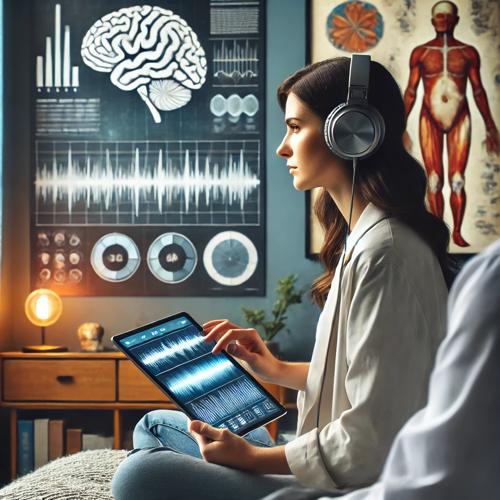
Music has been an essential part of human culture for thousands of years, used for communication, celebration, and emotional expression. In recent decades, scientific research has confirmed what many have intuitively understood—music has powerful effects on the brain and body. Music therapy is an evidence-based practice that harnesses the therapeutic potential of sound to treat a wide range of physical and psychological conditions.
From reducing stress and anxiety to improving motor function and cognitive abilities, music therapy is transforming the way we approach healing. Advances in neuroscience and psychology continue to uncover how rhythm, melody, and harmony influence the mind and body, making music therapy an increasingly valuable tool in modern healthcare.
One of the most fascinating aspects of music therapy is its ability to engage multiple regions of the brain simultaneously. Unlike many other activities, which primarily activate one or two areas, music stimulates an extensive network of brain structures.
Listening to or creating music engages the auditory cortex, which processes sound, as well as the limbic system, responsible for emotions and memory. This explains why certain songs can evoke strong emotional reactions or bring back vivid memories. Music therapy also influences the prefrontal cortex, which plays a role in decision-making and self-awareness, and the motor cortex, which controls movement.
Studies using functional MRI and EEG scans have demonstrated that music can alter brainwave activity. Slow, calming music encourages the production of alpha waves, associated with relaxation and meditative states. Faster tempos stimulate beta waves, which are linked to focus and alertness. These neurological effects make music a versatile tool for regulating emotions, improving concentration, and even enhancing creativity.
One of the most well-documented benefits of music therapy is its ability to reduce stress and anxiety. Listening to soothing music has been shown to lower cortisol levels, the hormone associated with stress. This can help reduce heart rate, blood pressure, and overall physiological tension.
Music therapy is commonly used in hospital settings to help patients relax before and after surgery. Research has found that patients who listen to music before an operation experience lower anxiety levels and require less sedation. Similarly, post-surgical patients who engage in music therapy report lower pain levels and improved recovery times.
For individuals with generalized anxiety disorder or panic attacks, music therapy provides a non-invasive way to calm the nervous system. Techniques such as guided music listening, deep breathing exercises with rhythmic sounds, and progressive muscle relaxation with music help regulate the body's stress response and promote emotional balance.
Rhythm is a fundamental element of music therapy, particularly in rehabilitation programs. The connection between rhythmic auditory stimulation and movement has been widely studied in patients recovering from strokes, brain injuries, and neurodegenerative diseases such as Parkinson’s.
A technique known as rhythmic auditory stimulation (RAS) uses steady beats to help individuals regain motor control. When a patient listens to rhythmic music, their brain synchronizes movements with the beat, improving coordination and mobility. This method has been especially effective for stroke survivors who struggle with walking and balance.
In Parkinson’s disease, where movement becomes slow and rigid due to a decline in dopamine-producing neurons, rhythmic music helps regulate gait patterns and reduce the likelihood of freezing episodes. Research suggests that music therapy can stimulate dopamine production, improving both motor function and mood in patients with movement disorders.
Music has a remarkable ability to enhance memory, making it a valuable tool for individuals with Alzheimer’s disease and other forms of dementia. The connection between music and memory is due to the brain’s ability to associate songs with specific events and emotions. Even in advanced stages of dementia, patients often retain the ability to recognize familiar music and respond to it emotionally.
Studies have found that listening to music from their youth can help dementia patients recall forgotten memories, improve mood, and increase social interaction. Personalized music therapy programs, which involve creating playlists based on an individual’s past experiences, have shown significant success in reducing agitation and depression in dementia patients.
Music therapy is also used in speech rehabilitation, particularly for individuals recovering from strokes or traumatic brain injuries. Melodic intonation therapy (MIT) helps patients regain speech by using singing and melody to stimulate the brain’s language centers. This technique encourages the brain to form new neural connections, aiding in speech recovery.
Music has a profound impact on emotions, often serving as a safe outlet for expression. For individuals struggling with depression, PTSD, or emotional trauma, music therapy provides a non-verbal way to process and communicate feelings.
One of the most effective techniques in music therapy for emotional healing is songwriting and lyric analysis. Writing songs allows individuals to articulate their emotions, express their personal stories, and gain a sense of empowerment. Lyric analysis, where patients discuss the meaning behind song lyrics, helps them explore complex emotions and connect with their inner experiences.
Music therapy also influences the brain’s reward system, which plays a role in motivation and pleasure. Engaging in music-making activities releases dopamine and oxytocin, neurotransmitters associated with happiness and social bonding. This makes music therapy an effective intervention for individuals experiencing social withdrawal or emotional numbness.
Music therapy is increasingly being used to treat sleep disorders such as insomnia. Certain types of music, particularly slow-tempo classical pieces, ambient soundscapes, and nature sounds, have been found to promote deeper and more restorative sleep.
Music’s ability to slow heart rate and reduce muscle tension makes it a natural sleep aid. Studies show that individuals who listen to relaxing music before bedtime fall asleep faster, experience fewer night-time awakenings, and wake up feeling more refreshed. Music therapy is also beneficial for individuals with PTSD-related sleep disturbances, as calming music helps reduce hyperarousal and night-time anxiety.
Pain perception is influenced by psychological and emotional factors, and music therapy can help alleviate chronic pain by redirecting focus and altering pain signals in the brain.
Research suggests that listening to music can increase the release of endorphins, the body's natural painkillers. Music therapy is commonly used in palliative care, cancer treatment centers, and rehabilitation facilities to help patients manage chronic pain conditions.
Active participation in music, such as playing instruments or singing, engages the brain’s sensory pathways, reducing the perception of pain. This makes music therapy a valuable complementary treatment for conditions such as fibromyalgia, arthritis, and post-surgical recovery.
Music therapy is a powerful and scientifically backed approach to healing the mind and body. By engaging the brain’s neural networks, regulating stress responses, improving motor function, and enhancing emotional well-being, music offers a unique form of therapy that goes beyond traditional medical treatments.
As research continues to expand our understanding of how music influences the brain, the future of music therapy looks promising. From hospitals to mental health clinics, rehabilitation centers, and palliative care, the integration of music into healthcare is revolutionizing the way we approach healing. Music therapy is not just about listening to pleasant sounds—it is about harnessing the profound power of sound to improve lives, restore balance, and promote overall well-being.
